
Tier 1 Websites
Guaranteed Editorial Coverage
AI, Visa & SM Verification

100% Moneyback Gaurantee
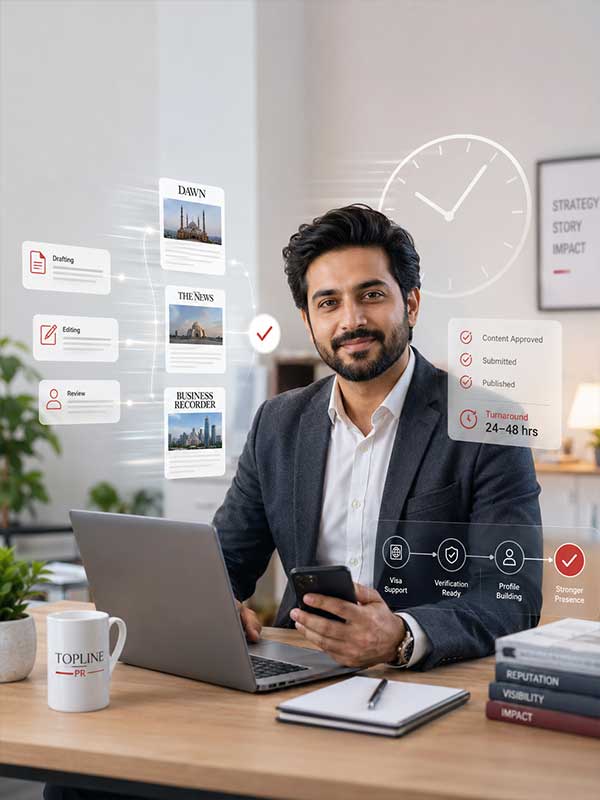



A strong feature on a recognised platform can make your work look more established, searchable and trustworthy. Instead of saying you are credible, Earned media coverage helps others see proof of your expertise.

For an EB-1A, EB-2A, O-1, UK Global Talent Visa, Australia National Innovation Visa media proof can support profiles as supporting evidence. Media Coverage helps create qualifying published material evidence around your work and expertise.

Verification platforms often look for public presence beyond social activity. Published media coverage can support your digital footprint and make your name easier to verify, search, and understand.

When someone searches your name, brand, or expertise, credible articles can shape the first impression. Media coverage helps create stronger public signals across Google, AI tools, and online discovery.

Wikipedia and profile-documentation work usually needs credible public references. Strong media articles can support a broader evidence base for future documentation, notability review, and public profile development.

Getting featured can create visibility beyond your own channels. It improves trust before conversations begin, supports inbound interest, and gives your profile or brand a stronger reason to be noticed.
You choose the publications that best fit your brand and budget. We have access to over 75+ Top Pakistani online publications.
Topline PR reaches out to the editorial teams of the selected publications, briefs them on your profile, key details, and requirements. The publication prepares a bylined PR article draft aligned with your profile, positioning, and campaign goals.
After you review the draft and share your feedback, the journalist revises the article accordingly and publishes it. Once live, our team sends you the published link, live URL, and a screenshot of the article.

Topline PR gives you a clear 100% money-back guarantee. If your agreed editorial coverage is not published within the committed timeline, or if the placement does not meet the agreed editorial route, your payment is refundable. Our success ratio is extremely strong, but this guarantee keeps your investment protected and gives you confidence before starting.
Your coverage is placed through an editorial route, not as a sponsored, paid, advertorial, promotional or press release tag. Depending on the story format, it may appear under a reporter, editor, news desk or correspondent name. The final format can be expert commentary, profile feature, interview-based story or case study, shaped for credibility and public recognition.


Topline PR provides access to 50 plus credible media platforms, including ARY, Geo, Express Tribune, Dawn, Business Recorder, The Nation, Nawa-i-Waqt, Profit Magazine and APP, among others. These major publications help build recognition for visa profiles, social verification, Wikipedia support, Google visibility, AI search presence and stronger professional credibility for serious applicants, executives, founders and brands.
For urgent requirements, Topline PR can start execution quickly and arrange fast editorial movement where the selected publication and story angle allow it. In suitable cases, the first coverage can move within 72 hours after complete documents, payment and approval. This is especially useful for visa, verification and profile-building timelines where speed matters most, without unnecessary delays.


We keep the process simple for busy founders, professionals, consultants, creators and business leaders. You share your CV, profile details and a short form; we handle journalist coordination, editorial briefing, follow-up, draft review and publication movement. You stay involved where approval is needed, while Topline PR manages the heavy execution work professionally and smoothly end-to-end.
Topline PR can plan multiple editorial placements within the same overall timeline, instead of making you wait 40 days for each separate article. For visa or profile-building requirements, we can schedule different publications with sensible gaps of 72 hours to a few days, and complete several selected placements within under 40 days where approved by editors.

Founders use editorial visibility to explain their journey, market relevance and leadership story. With Earned media coverage, their work gains stronger context for investors, partners and future clients.
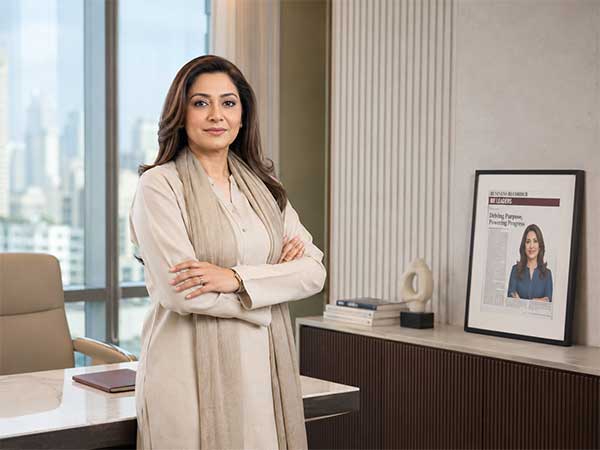
CEOs & industry leaders need more than company announcements. Bylined Articles, expert commentary and profile features help position them as visible voices in their sector.
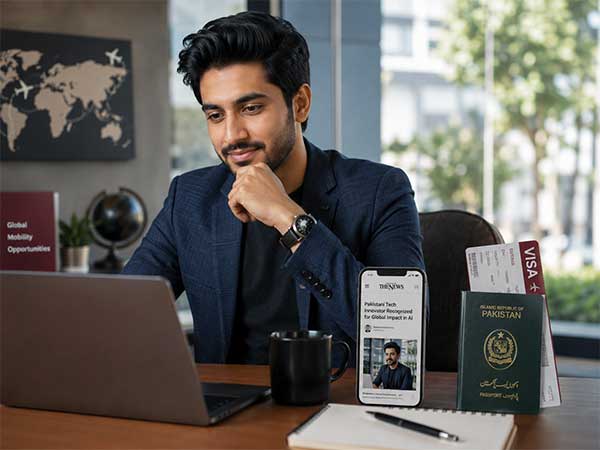
Immigration applicants often need credible third-party visibility. As an EB-1A PR Agency Pakistan support partner, Topline PR helps shape media proof for EB-1A, O-1 and Global Talent PR objectives.
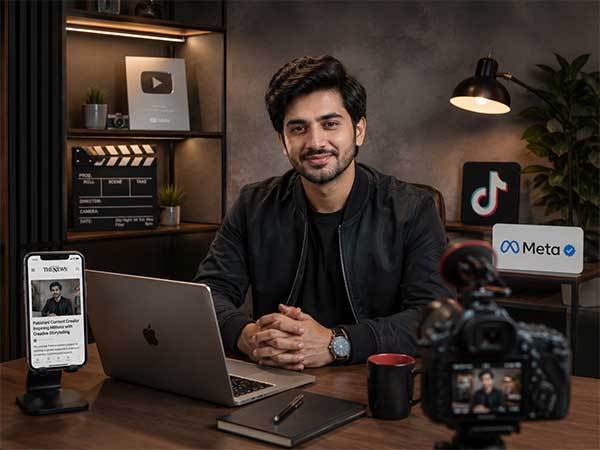
Creators and influencers need public recognition beyond social numbers. O-1 visa media coverage, profile stories and credible editorial visibility can strengthen the authority behind their digital identity.
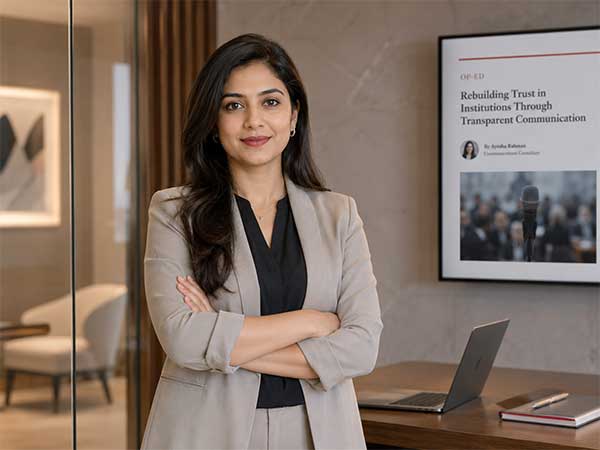
Consultants, coaches, doctors, lawyers and specialists can use Op-ed placement Agency Pakistan support, expert commentary and authored editorial placements to build trust before clients ever speak to them.
Brands and services need story-led credibility, especially when direct promotion looks weak. Credible media coverage can place the brand within a relevant market, category or public-interest conversation.
An editorial profile or profile feature puts the spotlight directly on your journey, sometimes on a breakthrough, and sometimes on the significance of your work in the field. The result is stronger published material about you.
We position your expertise inside timely, relevant stories where your insights help explain a trend, issue, innovation, or industry shift. This type of expert commentary is useful when the goal is to show your ideas and field knowledge.
Interviews create a more direct and personal form of visibility by letting your ideas, perspective, and experience come through in published manner. They work particularly well when you need stronger notability and coverage.
Byline articles publish your ideas under your own name or professional identity. This format supports thought leadership, expert positioning, Authored editorial placements and long-term authority building.
Send the CV and short form, and we prepare the story angle for the chosen publications.
We contact the selected publications, manage outreach, and keep your team updated.
Whether it is 1 article or 5, we deliver all agreed placements within 40 days.


EB-1A, EB2-NIW, O-1, Australia NIV, UK Global Talent Visa Publicity
Guaranteed Earned Media Coverage can become a serious asset for applicants who need stronger public recognition, more credible USCIS Evidence, and a better Evidence Portfolio. Unlike self-promotion or sponsored publicity, real earned editorial coverage can create stronger published material about you in a major publication or other recognized editorial outlet. For applicants pursuing EB-1A, EB-2 NIW, O-1, UK Global Talent, or the Australia National Innovation Visa, the right coverage can support a stronger public profile and more persuasive supporting documentation.
KEY POINTS EVERY APPLICANT SHOULD KNOW
✓ Guaranteed Earned Media Coverage is most valuable when it creates credible published material about you, not generic promotion.
✓ Sponsored content, advertorials, and generic press release distribution are not the same as qualifying earned editorial coverage.
✓ Strong Visa Media Coverage can support a more persuasive media evidence portfolio and stronger USCIS Evidence.
✓ Earned editorial media carries more weight than self-promotional content because it offers stronger third-party validation.
✓ A well-positioned article in a major publication can do more than create visibility. It can become long-term public proof for serious immigration pathways.
✓ EB-1A approval rates fell to 66.6% in FY2025 Q3 (Apr–Jun 2025) — the lowest quarterly rate in three years — making evidence quality more critical than ever
Media as a Strategic Asset
Immigration officers assess evidence, not potential. When you file an EB-1A, EB-2 NIW, O-1, UK Global Talent, or Australia National Innovation Visa application, the adjudicator is not deciding whether you are talented in a general sense. They are deciding whether your documentation proves that your work stands above your peers in a way that is visible, verifiable, and nationally or internationally recognised. That distinction should completely shape how you think about media coverage, because in this context, visibility only matters when it can be documented as credible evidence.
Recommendation letters matter, but they come from people who know you and naturally want to support your case. Internal achievements such as patents, revenue growth, leadership impact, or promotions are meaningful, but they are still self-reported. Earned editorial coverage in recognised publications provides something neither of those can offer on its own: independent third-party validation. When a publication with real editorial standards covers your work, it signals that people with no stake in your visa outcome considered your contributions important enough to feature. That signal carries real evidentiary value with USCIS adjudicators.
Editorial coverage signals that journalists with no stake in your outcome judged your work significant enough to feature — the exact third-party standard USCIS looks for.
Published articles carry URLs, author bylines, publication dates, and circulation data — everything an adjudicator needs to assess credibility and reach without relying on your word alone.
A single strategically framed placement can simultaneously satisfy Criterion 6 (published material), Criterion 5 (original contributions), and Criterion 8 (critical role), depending on article content.
The key is understanding that not all media is equal in the eyes of immigration. Random mentions in low-traffic blogs, wire-distributed press releases, and sponsored articles all fail the test — they represent your own voice, not independent editorial judgment. What matters is relevance, outlet authority, and how your story is positioned. Coverage framed around your specific contributions to your field, published in an outlet with verifiable readership, and written by a journalist who is not being paid to feature you — that is the evidence standard EB-1A requires.
“The strongest EB-1A petitions are built when your public narrative, media angles, and evidence categories are designed together — not when PR is layered on at the end. Each placement should support a specific criterion, agreed with your immigration attorney before publication begins.”
For EB-1A applicants, a media portfolio built across multiple credible outlets over 1–6 months (in ideal conditions) demonstrates sustained national or international acclaim — the precise standard the extraordinary ability category requires. For O-1 applicants, consistent coverage positions you as a recognised authority in your field, supporting the argument that you are distinguished and well known beyond your immediate professional circle.
What USCIS Requires
The regulation requires “published material about the alien in professional or major trade publications or other major media, relating to the alien’s work in the field for which classification is sought.” Documentation must include the title, date, and author of the material, and evidence of circulation, viewership, or audience.
Source: 8 CFR § 204.5(h)(3)(iii) — law.cornell.edu · USCIS Policy Manual, Volume 6, Part F, Chapter 2
The regulation sets four requirements that every qualifying placement must satisfy. The material must be about you — not just mentioning you in passing, and not focused on your products or company. It must appear in a professional or major trade publication or other major media — a defined standard that means recognised outlets with professional editorial staff and verifiable readership. It must relate to your work in the field in which you are claiming extraordinary ability. And it must be accompanied by documentation including circulation data, publication dates, and authorship.
What USCIS does not accept is equally important. Marketing materials, promotional content, press releases, sponsored articles, and self-published blog posts consistently fail to satisfy this criterion because they do not represent independent third-party validation. The October 2024 USCIS Policy Manual update clarified that adjudicators should assess whether coverage represents genuine editorial interest in the applicant’s contributions, or whether it was arranged and paid for.
✓ Articles authored by independent journalists
✓ Published through established editorial processes
✓ In outlets with professional editorial staff
✓ With verifiable circulation or web traffic data
✓ Focused on your specific achievements and contributions
✓ Permanently archived and accessible via direct URL
✓ National publications: Forbes, Business Insider, Fast Company, Entrepreneur
✓ Industry publications relevant to your field
✖ Press releases and wire distributions
✖ Sponsored content, advertorials, or native ads
✖ Self-authored articles or contributed op-eds written by you
✖ Coverage focused on products or services, not your work
✖ Generic company profile pieces without specific achievements
✖ Social media mentions and posts
✖ Articles that disappear or are behind paywalls USCIS cannot access
✖ Company newsletters or trade association bulletins
Authored editorial placements in Dawn, Express Tribune, Business Recorder, The News, APP, The Nation more. From PKR 75,000. Money-back guarantee.
Topline PR is a leading Pakistan-based public relations agency that helps visa applicants, individuals, founders, and executives secure Guaranteed Earned Media Coverage in major media, top publications, and credible Tier-1 news publications in Pakistan. Our work is built around bylined PR articles and authored editorial placements, not generic publicity, and is designed to strengthen public credibility, media visibility, and long-term evidence value.
Topline PR works with recognised Pakistani news and business outlets including Dawn, Express Tribune, The News, Business Recorder, The Nation, APP, Geo.tv, ARY News, Dunya News, Aaj TV, 24 News, and Profit, along with 50+ more publications. Publications are matched to your profile, industry, goals, and the type of coverage most likely to support stronger credibility, discoverability, and public proof.
This page is focused on Guaranteed Earned Media Coverage, not sponsored advertising. That means the goal is credible earned editorial media, bylined media coverage, and published material about you built around your profile, work, and achievements, rather than advertorial-style promotion.
Yes. Topline PR can structure multiple placements across different publications with different editorial angles, helping you build broader media visibility without repeating the same story in the same way everywhere. Multiple placements can strengthen your public profile, search presence, and long-term media evidence portfolio.
Yes. Topline PR works with startups, founders, and early-stage businesses that want stronger credibility, thought leadership, and public recognition through editorial coverage. This is especially useful for founders who want their own profile to appear stronger for investor conversations, authority building, business development, and future immigration pathways.
Yes. Topline PR provides Guaranteed Earned Media Coverage designed to help build stronger USCIS Evidence for EB-1A applicants. The value of this coverage is that it can create credible published material about you in major media or recognised editorial publications, which is directly relevant to the published material criterion when the material is about you and your work in the field.
Yes, in the right case it can strengthen the overall profile. EB-2 NIW is assessed differently from EB-1A, but USCIS still looks at whether your proposed endeavor has national importance and whether you are well positioned to advance it. Strong Visa Media Coverage, public credibility, and recognised editorial visibility can help reinforce how your work, impact, and profile are perceived when they align with the substance of your case.
Yes. O-1 cases are built around extraordinary ability or achievement and sustained national or international acclaim supported by documentation. Well-positioned Earned editorial media and Visa Publicity can help strengthen that public record by showing that recognised outlets considered your work, achievements, or expertise important enough to cover.
Yes, depending on your field and evidence mix. The UK Global Talent route is for leaders or potential leaders in fields such as academia or research, arts and culture, and digital technology, and many applicants need either an endorsement or an eligible prestigious prize. Strong editorial visibility can support the wider profile when it aligns with the endorsement body’s criteria and shows recognised achievement, leadership, or promise in your field.
Yes. Australia’s National Innovation Visa is for exceptionally talented migrants and established or emerging leaders who can make significant contributions benefiting Australia’s future prosperity. Since the route is invitation-based and built around high-calibre achievement, credible editorial coverage can strengthen how your profile is publicly understood when it reflects genuine accomplishment, innovation, leadership, or recognised impact.
For visa purposes, the strongest media evidence is coverage that is clearly about you, relates to your work in the field, and appears in recognised publications with real editorial standards, readership, and public credibility. For EB-1A, the regulation specifically refers to published material about the person in professional or major trade publications or other major media, which is why recognised editorial outlets carry more weight than weak self-promotion.
For visa programs such as EB-1A, EB-2 NIW, and O-1, many applicants aim to build 3 to 5 strong articles so their profile looks better documented, more visible, and more persuasive over time. The right number depends on your field, your current profile strength, and your attorney’s filing strategy, but multiple quality placements usually create a stronger Evidence Portfolio than a single article alone.
Topline PR can typically publish 3 to 5 placements within a time span of around 40 days, depending on the agreed publications, profile readiness, and editorial timelines. If you want the placements spaced over a longer period, that can also be planned so the coverage timeline looks more natural and strategically distributed.
That depends on the program type and the kind of media evidence your profile needs, but normally the coverage mix may include news features, expert commentary / news features, editorial profiles / profile features, case studies, interviews, bylined PR articles, and other forms of earned editorial media. The angle is selected according to what best fits your profile, your field, and the visa or credibility objective.
They can create visibility, but they are not the same as Guaranteed Earned Media Coverage. For stronger visa evidence, the safer route is usually earned editorial coverage that creates credible published material about you in recognised publications, because that gives you stronger third-party validation than obvious promotional content.
On this Guaranteed Earned Media Coverage page, the goal is not direct promotional linking. Earned editorial placements are usually built around the strength of your story, your expertise, your achievements, or your profile, not around commercial backlinks or overt promotion. That is one of the main differences between this service and a separate paid or sponsored placements model.
Yes. Many applicants start earlier so they can build stronger public recognition over time instead of trying to create everything close to filing. Early coverage can make the overall Evidence Portfolio look more natural, more credible, and more persuasive.